 Structo
Reflective Insulation
Radiant barriers to reject heat and keep your home cool.
Reflective Insulation and Radiant Barriers
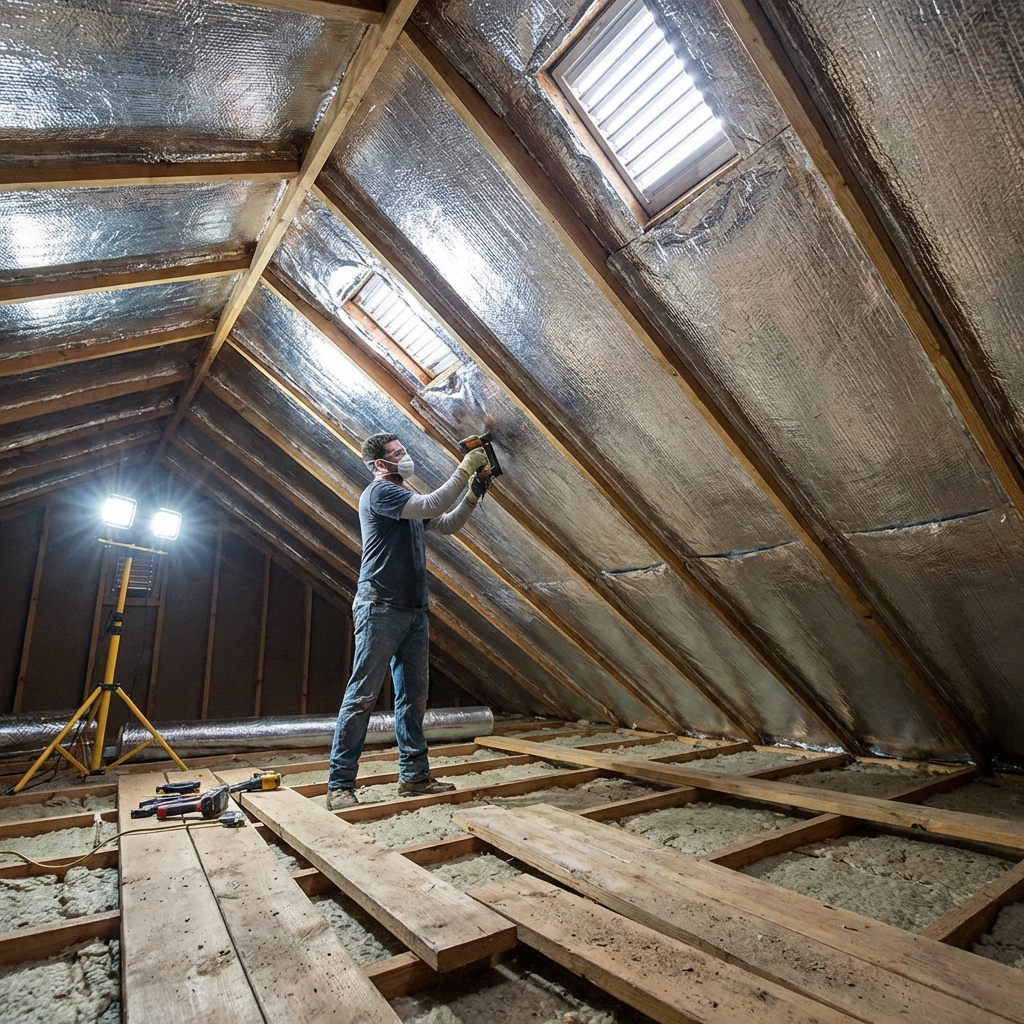
Reflective insulation (often called a radiant barrier) works differently than traditional mass insulation like fiberglass or cellulose. While mass insulation slows conductive heat transfer, reflective insulation blocks radiant heat gain. In hot climates, solar radiation strikes the roof and radiates heat into the attic and living spaces. A radiant barrier reflects this heat away, keeping the building significantly cooler.
Structo Insulation installs high quality reflective insulation systems designed to reduce summer heat gain and lower cooling costs.
How Reflective Insulation Works
Radiant heat travels in a straight line from a warm surface to a cooler one. When the sun heats a roof, the roof radiates that heat downward. A radiant barrier, typically made of highly reflective aluminum foil closest to an air space, reflects 90-97% of that radiant energy, preventing it from being absorbed into the building.
Key Benefits of Radiant Barriers
Reduced heat gain
Blocks the majority of radiant heat entering through the roof, which is the primary source of
heat gain in many buildings.
Lower attic temperatures
By reflecting heat, attic temperatures can be reduced by up to 30 degrees, reducing the load on
HVAC ductwork and equipment located in the attic.
Improved comfort
Rooms below the attic stay cooler and more comfortable during peak summer heat.
Energy savings
Reducing the cooling load translates directly to lower electricity bills during hot months.
Ideal Applications for Reflective Insulation
Reflective insulation is most effective in specific scenarios:
- Hot climates: Regions with long cooling seasons and intense sun exposure benefit most.
- Attics with HVAC equipment: Keeping ductwork and air handlers cooler improves system efficiency.
- Metal buildings: Reflective insulation is standard for metal roofs to prevent visible heat radiation.
- Garages and porches: Effective for spaces without air conditioning to improve comfort.
Installation and Effectiveness
For a radiant barrier to work, it must face an air space. Dust accumulation on the reflective surface can reduce performance over time, so proper installation is critical. Structo Insulation installs radiant barriers in locations where they will remain effective and durable, such as the underside of roof rafters.
Request a Radiant Barrier Evaluation
A radiant barrier is an excellent supplement to traditional insulation but is rarely a replacement for it. The best results come from a combined approach.
Request a radiant barrier evaluation to determine whether reflective insulation is a smart investment for your home or building.